FSANZ Calls for Second Submissions on the Health Star Rating System

Food Standards Australia New Zealand (FSANZ) has opened the second round of public consultation on Proposal P1067 – Health Star Rating System, which considers whether the Health Star Rating (HSR) system should become mandatory for most packaged foods sold in Australia and New Zealand. Announced on the 28th of October 2026, this latest consultation follows the first round of submissions and provides stakeholders with an opportunity to comment on the proposed regulatory approach and draft amendments to the Food Standards Code.  

The HSR system is currently voluntary and provides consumers with a front-of-pack rating, ranging from 0.5 to 5 stars, intended to help compare the overall nutritional profile of similar packaged foods. The proposal follows the failure to meet voluntary uptake targets, prompting food ministers to request that FSANZ assess whether mandatory requirements should be introduced.  

The second consultation incorporates changes made following feedback received during the first consultation, with the aim of clarifying requirements and simplifying implementation and enforcement. In recognition of the high level of stakeholder and public interest in this proposal, FSANZ has extended its usual 6-week consultation period to 8 weeks.   

Following its assessment, FSANZ has progressed the proposal to a draft regulatory measure, with several clarifications and amendments incorporated in response to stakeholder feedback. The second consultation is seeking feedback on the proposed draft, including the categorisation and adjustment of specific food categories, the performance of the algorithm, alignment with dietary guidelines, mandating the application to applicable products, and an impact risk assessment for the industry. Businesses are encouraged to provide evidence-based feedback, particularly regarding practical implementation challenges and anticipated costs. 

If the proposal progresses, mandating HSR could have significant implications for food manufacturers, suppliers, retailers and brand owners. Businesses may need to review their existing product labelling, packaging artwork, nutrition data and internal systems to ensure they can meet the proposed requirements. 

Although the HSR system remains voluntary while the proposal is under consideration, businesses should monitor the consultation outcome and begin assessing the potential impact on product specifications, nutrition calculations and packaging artwork. Early preparation may help minimise disruption if mandatory HSR requirements are introduced. 

For further information, refer to the official FSANZ Proposal P1067 webpage, which includes the consultation report and supporting assessment documents. The second consultation will run from the 28th of October to the 23rd of December 2026. 

MSAC can assist with HSR calculations, reviews and packaging readiness, helping you identify gaps early and understand what potentially will be required for each product. From calculating and verifying to providing artwork guidance for your product preparation, MSAC is positioned to help manage regulatory changes. 
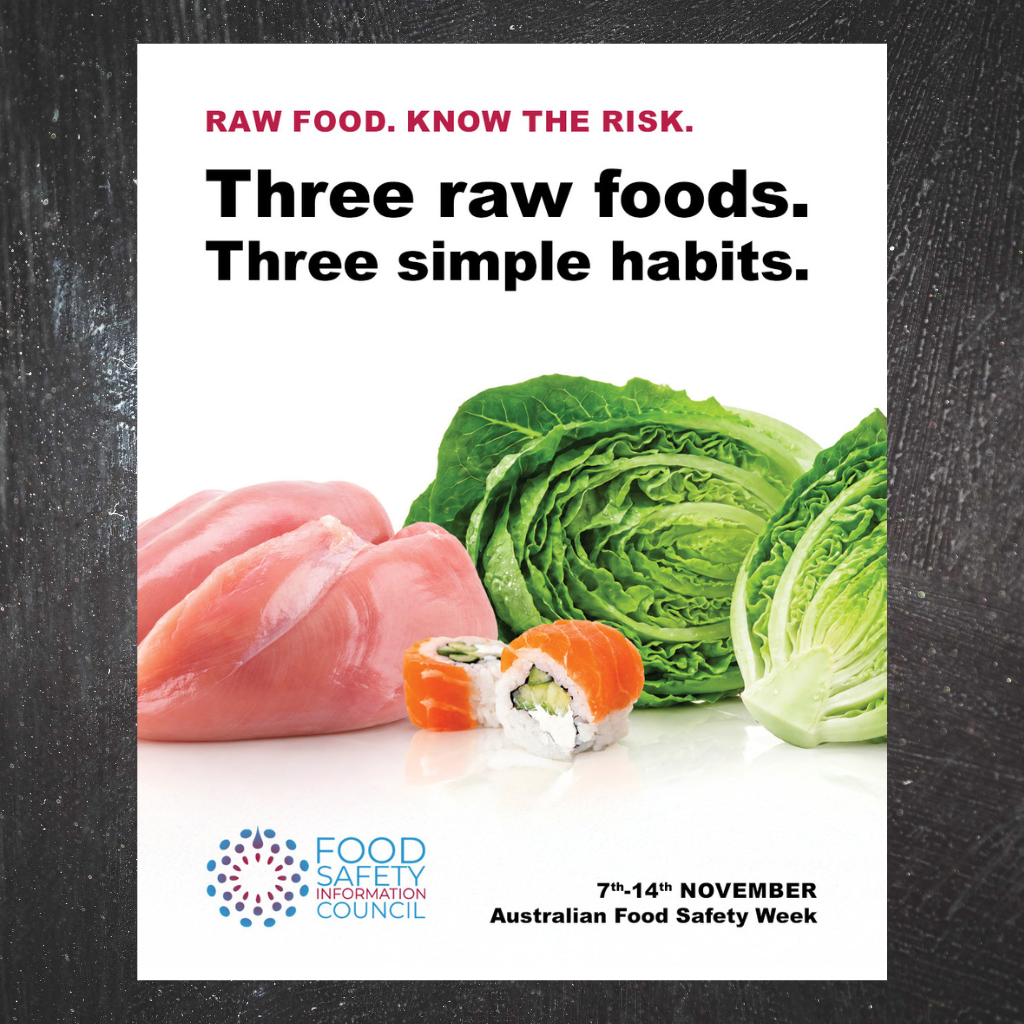
Australian Food Safety Week 2026 | 7th–14th November Raw Food: Freshness Does Not Mean Safety

Australian Food Safety Week 2026 occurred on the 7th-14th of November with a key focus on “Raw Food – know the risk”, highlighting the food safety considerations associated with raw and minimally processed foods.  

There has been an increase in consumer demand for raw foods such as sushi, sashimi, oysters, poke bowls, ceviche, fresh produce and raw milk cheeses. This continues alongside emerging social media trends promoting raw eggs, meat, dairy and other unpasteurised products. These foods present an important challenge because there may be no kill step to eliminate harmful microorganisms.  

Without cooking, pasteurisation or another validated kill step, food safety becomes increasingly dependent on controls throughout the supply chain. 

Potential risks include: 

  • Environmental contamination 
  • Poor hygiene and cross-contamination 
  • Inadequate supplier controls 
  • Inadequate temperature controls  
  • Incorrect consumer handling 

Importantly, many foodborne pathogens do not change the smell, taste or appearance of food. A product appearing fresh therefore does not necessarily mean it is safe.  

Different foods require different controls. For example, raw seafood relies heavily on sourcing, hygienic harvesting and temperature management, while leafy vegetables require consideration of irrigation water, soil amendments, animals, washing, sanitising and equipment hygiene.  

Australian regulatory requirements increasingly reflect this supply-chain approach. Standard 4.2.8 – Primary Production and Processing Standard for Leafy Vegetables establishes requirements for the primary production and processing of leafy vegetables intended to be consumed raw.  

Labelling also forms part of the food safety control system. Standard 1.2.6 requires storage conditions and directions for use where these are necessary to ensure the food remains safe or keeps until its applicable date marking.  

Businesses should be actively implementing quality control steps for effective, safe production of their products. Risk-management controls should centre on:    

  • identification of potential hazards, including their likelihood and severity 
  • controls at production and harvest 
  • processing and packaging controls 
  • maintenance of the cold chain through storage, distribution, retail and food service 
  • clear consumer guidance about appropriate handling and storage 

Food safety and regulatory compliance require effective controls at every stage of the product lifecycle. MSAC Solutions can assist with food regulatory reviews, label and artwork compliance, product specifications, and broader food safety requirements. If you need support reviewing existing products or preparing new products for market, our regulatory team can help identify requirements early.  

Beverages Council Sets 2030 Sugar Target

The Australian Beverage Council has set a new voluntary target aimed at continuing the shift towards lower-sugar drink choices. The Australian Beverage Council has launched its Beverage Choices Roadmap to 2030 with an industry-wide ambition for 70% of water-based beverage sales to come from low- or no-sugar varieties by 2030.  

The roadmap announced extends the organisation’s continued approach and has established four key pillars to focus on sugar reduction in the industry:  

Responsible Marketing and Advertising – Members are committed to ensuring advertising materials promote a healthy, balanced diet with responsible intake.  

Energy Drinks – Members routinely review progress to ensure ongoing efforts to comply with the Energy Drinks Commitment are regulated.  

Consumer Awareness – The roadmap commits to consumer education initiatives on clear information, HSR, nutrition information panels, and circular economy practices.   

Consumer Choice – Research shows intake of sugar-sweetened beverages is decreasing to low/no-sugar alternatives, guiding the drive toward the 70% goal to reach in 2030.   

The roadmap builds on the industry’s previous voluntary Sugar Reduction Pledge, which ended in 2025. Participating companies achieved a 21% reduction in sugar across relevant portfolios over the previous decade, with the council reporting that more than 255,000 tonnes of sugar were avoided from Australian diets. 

For food and beverage businesses, the roadmap signals continued industry focus on product reformulation, development of low- and no-sugar alternatives, and consumer-facing nutrition information. The council has also encouraged members to consider adopting the Health Star Rating ahead of any potential move to make the system mandatory. 

The announcement comes as Food Standards Australia New Zealand (FSANZ) continues work across several areas relevant to beverage manufacturers, including mandating HSR and reviewing novel foods and supplemented sport goods. FSANZ CEO Sandra Cuthbert applauds the work the Beverage Council are actioning to improve the health of the nation’s population.  

Members of the Beverage Council are encouraged to support the roadmap through the following steps:  

  • Producing low/no-sugar drinks 
  • Reformulating drinks to reduce added sugar 
  • Investing in market resources to promote healthier varieties  
  • Applying the HSR on packaging ahead of mandatory implementation  
  • Producing a variety of pack sizes to support portion control 

The roadmap represents a voluntary industry initiative providing a useful indication of the direction of the Australian beverage sector. Businesses should continue to monitor these developments, including reformulation, by considering whether future product development strategies align with the industry’s 2030 objectives. 

Our regulatory team can assist businesses considering reformulation or new product development with nutrition assessments, claims, labelling and artwork reviews, helping ensure regulatory requirements are considered from development through to market. 

Australian Packaging Reform Update

The Government’s packaging reform has provided an update, providing information on further targeted consultation on the proposed Design for Kerbside Recyclability Grading Framework. While a decision has not yet been made, governments have agreed to continue work towards strengthening Australia’s mandatory national packaging framework. 

The reform follows an independent review of the existing co-regulatory framework, which concluded that the current system required improvement. Consultation undertaken in 2024 considered three potential regulatory approaches, ranging from improvements to the existing co-regulatory model through to an extended producer. 

Areas being explored include: 

  • improving packaging design and recyclability 
  • reducing packaging and increasing reuse 
  • increasing recycled content 
  • removing harmful chemicals from packaging 
  • improving consistency in the treatment of problematic plastics across Australian jurisdictions 
  • consumer and business education 

For now, existing packaging obligations remain in place. Businesses should continue to comply with the current co-regulatory arrangements and work towards the National Packaging Targets. Businesses should start considering the direction of reform when developing new packaging. Packaging recyclability, material selection, recycled content, chemicals of concern and opportunities to reduce or reuse packaging are increasingly important considerations and may become more significant as the regulatory framework develops.  

The update highlights that all businesses should keep working towards the National Packaging Targets. The Australian Packaging Covenant Organisation (APCO) will continue to administer the industry packaging scheme and undertake activities to support industry and drive action. State and territory governments are reminded of their requirements to meet their obligations with the current arrangements applied. 

Now is a good time for businesses to review their packaging portfolio and understand where future regulatory changes may create compliance or redesign requirements. For businesses developing or refreshing packaging, considering these requirements early can help reduce the risk of costly changes later.