Nutrition Panel Calculator Dataset Receives Major Update

Food Standards Australia New Zealand (FSANZ) has released a significant update to the dataset underpinning its Nutrition Panel Calculator (NPC), marking the first complete dataset refresh since 2011. The updated 2026 dataset includes nutrient information for approximately 1,500 foods, beverages and ingredients, providing food businesses with access to more current food composition data for calculating nutrition information panels.

The NPC is a free online tool used by food manufacturers to estimate the average nutrient content of products and prepare compliant nutrition information panels. The latest dataset draws primarily on FSANZ’s most recent food composition databases, including the Australian Food Composition Database (AFCD) and AUSNUT 2023. It also incorporates new data for a range of food additives and ingredients that have been approved under the Food Standards Code since the previous update.

For businesses that use the NPC to generate nutrition information, the update may result in changes to nutrient values for some ingredients and finished products. FSANZ notes that as food composition data is updated over time, nutrient calculations generated by the NPC may vary from previous results. Businesses should therefore consider reviewing any nutrition information panels that rely on NPC data, particularly when undertaking label updates, product reformulations or compliance reviews.

While the update improves access to nutrition data, it also serves as a reminder that food businesses remain responsible for ensuring the accuracy of nutrition information presented on labels and compliance with the Food Standards Code.

If you need assistance with your nutrition labelling and specification development and management, our services offer support for product development projects and guide food labelling compliance requirements.

FSANZ Releases 2026-27 Corporate Plan

Food Standards Australia New Zealand (FSANZ) has published its 2026-27 Corporate Plan, setting out the future strategic direction through to reinforcing its vision of delivering world-leading standards of safe food. The plan aligns with the new Food Regulation Strategic Plan and highlights FSANZ’s ongoing focus on protecting public health, maintaining safe and suitable food, and supporting a modern, science-based food regulatory system.

The plan identifies three key areas of activity:

  1. Developing food standards based on the best available scientific evidence.
  2. Coordinating regulatory activities across the food regulation system, including food incident responses and recalls.
  3. Providing advice to regulators and food standards information to industry and consumers.

A key focus of the corporate plan is to provide greater transparency around upcoming proposals and projects, helping stakeholders better understand what is on the horizon and when changes may occur. By taking a planned and coordinated approach, FSANZ can focus its resources on what will have the greatest impact on public health, food safety and the broader food regulatory system.

FSANZ recognises the changing food landscape, including innovation in food production, evolving consumer expectations, international regulatory developments, and emerging food safety risks. The continued emphasis on risk management, regulatory coordination, and evidence-based decision-making means food businesses can expect ongoing attention to compliance, traceability, product safety, and consumer information requirements.

A corporate plan outlines strategic direction to inform the industry and deliver tangible outcomes efficiently. With a focus on collaboration, FSANZ works with a reflection on stakeholder feedback across developing standards in line with governments, regulators and the food industry workforce.

To deliver these outcomes, FSANZ invests in five essential areas: workforce, regulatory science, digital transformation, communication, and governance, to strengthen the required capabilities. Altogether, this improves system performance to maintain ongoing trust and be better positioned to evolve and produce highly reputable resources.

MSAC supports this ongoing and future-focused approach to strengthen integration across the industry and deliver outcomes that contribute to a safe and reliable food environment. By continuing to monitor the strategies and future changes expected, we will support and guide in achieving positive outcomes with FSANZ and wider stakeholders in the food regulatory system.

Australia’s Packaging Recycling Reform: What Happens Next?

Australia’s approach to packaging waste and recycling has been the subject of ongoing discussion, with industry, government and consumers continuing to look for more consistent and effective solutions.

Recent developments have raised further questions about the future of packaging reform in Australia, following the Federal Government’s decision not to introduce proposed mandatory packaging standards during its current term.

The proposed reforms were intended to establish national packaging requirements, including minimum recycled-content targets and measures to reduce problematic materials and chemicals in packaging. The reforms followed an agreement between Australian governments in 2023, intended to move away from voluntary approaches and toward more consistent national standards.

For food manufacturers, retailers and packaging suppliers, consistency is particularly important. A broader question is also in discussion on the development of Australia’s domestic recycling industry. Australian recycling facilities are reportedly operating below capacity, while recycled materials can face competition from lower-cost imported plastics.

This creates a difficult cycle, without sufficient demand for recycled materials, investment in recycling infrastructure can become challenging, while without reliable domestic recycling capacity, businesses may find it more difficult to source recycled content.

The Government has cited cost-of-living pressures as a key consideration in its decision not to proceed with the proposed national scheme at this time. However, questions remain around the actual cost impact of mandatory recycled-content requirements.

Industry modelling referenced by the ABC estimated that mandatory recycling standards could add approximately 0.3 cents per packaging item. This discussion extends beyond the immediate cost of packaging. It also includes the longer-term costs associated with waste management, recycling infrastructure, resource recovery and environmental impacts.

Businesses should continue to consider packaging design, recycled content and recyclability outcomes as part of their broader product development and sustainability strategies, rather than waiting for mandatory requirements to be introduced. Our packaging regulatory services can assist businesses with reviewing packaging requirements; obtaining regulatory advice early can help reduce compliance risks and avoid costly packaging changes later.

A Proud Moment for MSAC Solutions

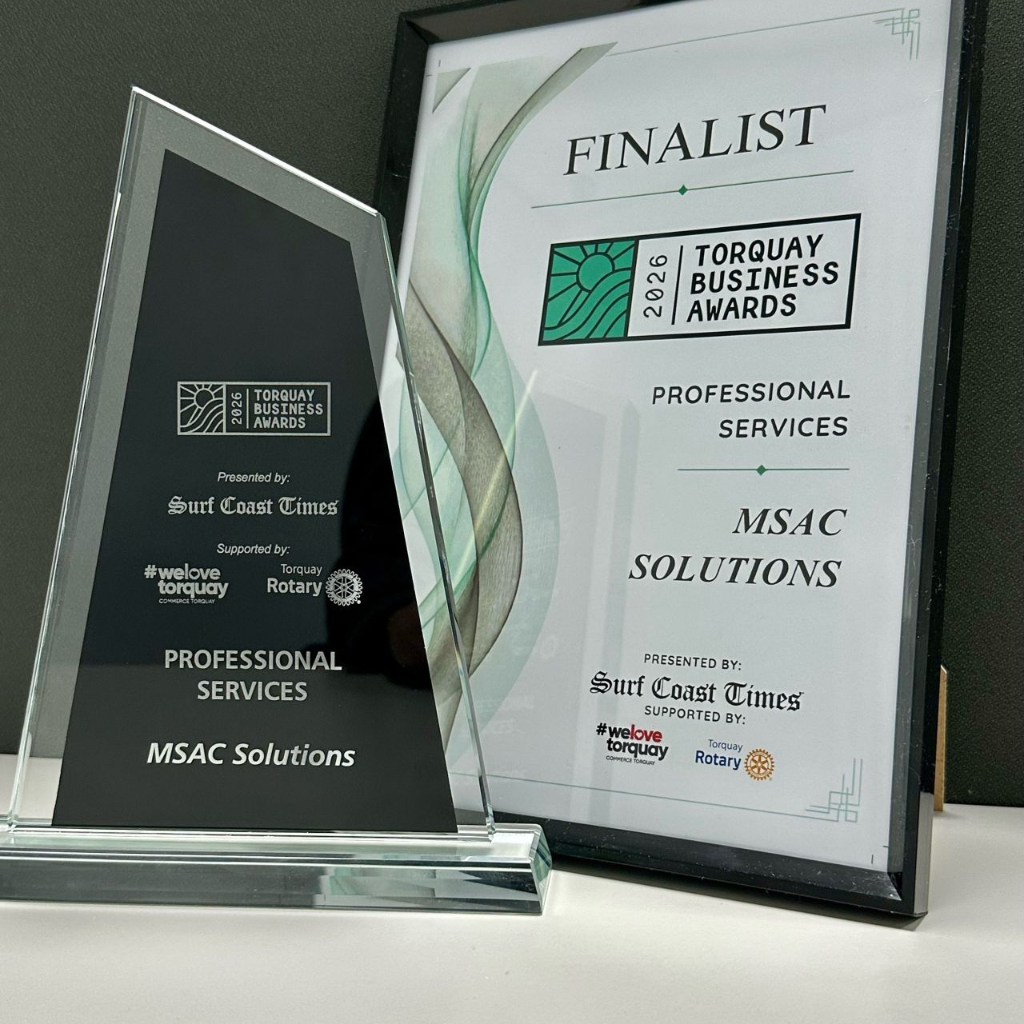
We are incredibly proud to have accepted the Professional Services Award for MSAC Solutions at the 2026 Torquay Business Awards.

This recognition is a wonderful acknowledgement of the professionalism, expertise and hard work of our dedicated team, who provide specialist support to clients across Australia and around the world.

MSAC Solutions began on the Surf Coast, and our local heritage continues to be an important part of who we are. Even our Addis Integrity Intelligence platform takes its name from Point Addis, reflecting the connection between our business and the region where it all began.

While our work now supports global clients, we remain proud of our Surf Coast roots and the community that has been part of our journey.

Receiving this award is a great recognition of what our team has built together and the commitment we bring to everything we do. We would like to thank the Torquay Business Awards for recognising MSAC Solutions, and our incredible team and clients for being part of our continued growth.

A very proud moment for MSAC Solutions and an exciting milestone as we look towards the future.