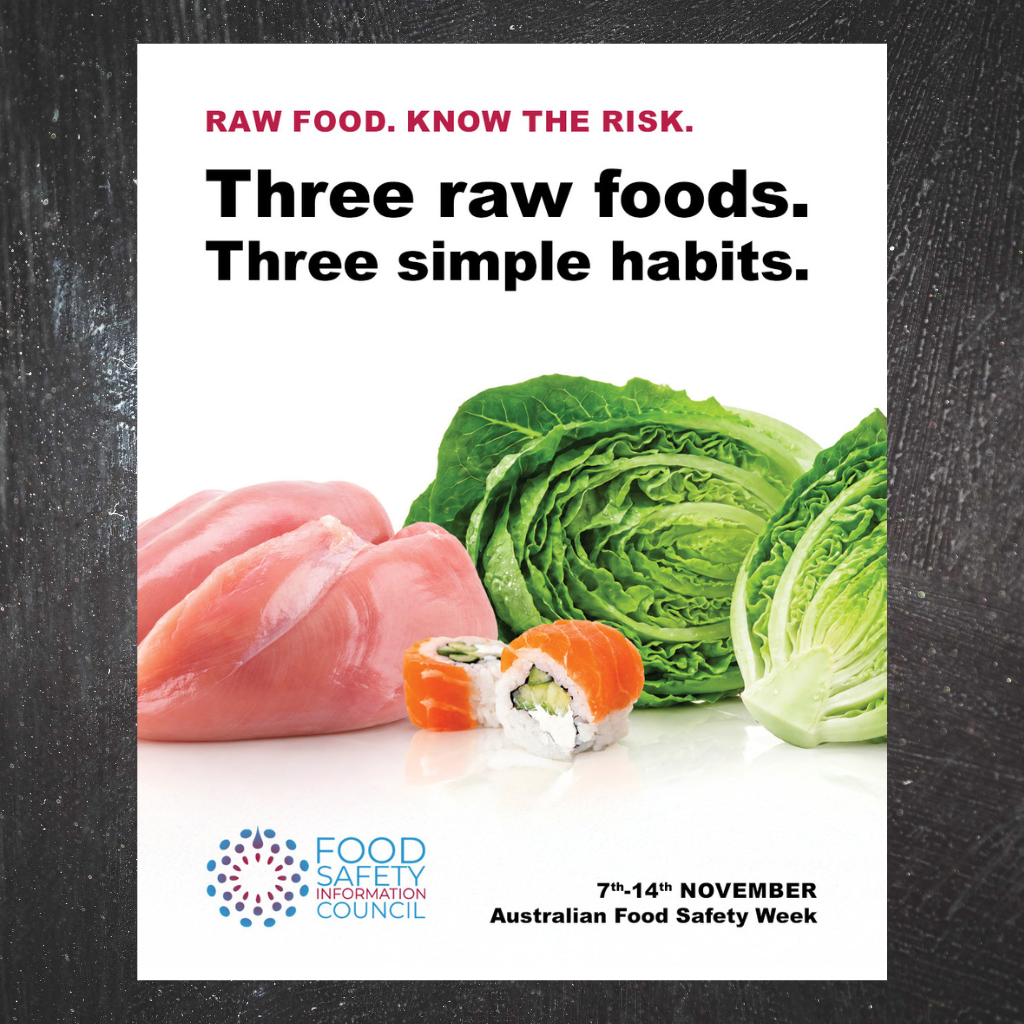
Australian Food Safety Week 2026 occurred on the 7th-14th of November with a key focus on “Raw Food – know the risk”, highlighting the food safety considerations associated with raw and minimally processed foods.
There has been an increase in consumer demand for raw foods such as sushi, sashimi, oysters, poke bowls, ceviche, fresh produce and raw milk cheeses. This continues alongside emerging social media trends promoting raw eggs, meat, dairy and other unpasteurised products. These foods present an important challenge because there may be no kill step to eliminate harmful microorganisms.
Without cooking, pasteurisation or another validated kill step, food safety becomes increasingly dependent on controls throughout the supply chain.
Potential risks include:
- Environmental contamination
- Poor hygiene and cross-contamination
- Inadequate supplier controls
- Inadequate temperature controls
- Incorrect consumer handling
Importantly, many foodborne pathogens do not change the smell, taste or appearance of food. A product appearing fresh therefore does not necessarily mean it is safe.
Different foods require different controls. For example, raw seafood relies heavily on sourcing, hygienic harvesting and temperature management, while leafy vegetables require consideration of irrigation water, soil amendments, animals, washing, sanitising and equipment hygiene.
Australian regulatory requirements increasingly reflect this supply-chain approach. Standard 4.2.8 – Primary Production and Processing Standard for Leafy Vegetables establishes requirements for the primary production and processing of leafy vegetables intended to be consumed raw.
Labelling also forms part of the food safety control system. Standard 1.2.6 requires storage conditions and directions for use where these are necessary to ensure the food remains safe or keeps until its applicable date marking.
Businesses should be actively implementing quality control steps for effective, safe production of their products. Risk-management controls should centre on:
- identification of potential hazards, including their likelihood and severity
- controls at production and harvest
- processing and packaging controls
- maintenance of the cold chain through storage, distribution, retail and food service
- clear consumer guidance about appropriate handling and storage
Food safety and regulatory compliance require effective controls at every stage of the product lifecycle. MSAC Solutions can assist with food regulatory reviews, label and artwork compliance, product specifications, and broader food safety requirements. If you need support reviewing existing products or preparing new products for market, our regulatory team can help identify requirements early.